This website or its third-party tools process personal data. You can opt out of the sale of your personal information by clicking on the "Do Not Sell or Share My Personal Information" link.
Do Not Sell or Share My Personal Information
Opt-out Preferences
We use third-party cookies that help us analyse how you use this website, store your preferences, and provide the content and advertisements that are relevant to you. However, you can opt out of these cookies by checking "Do Not Sell or Share My Personal Information" and clicking the "Save My Preferences" button. Once you opt out, you can opt in again at any time by unchecking "Do Not Sell or Share My Personal Information" and clicking the "Save My Preferences" button.
- [x]
Do Not Sell or Share My Personal Information
Cancel Save My Preferences
Your opt-out preference has been honored.
Banner closes automatically in s...
Tuesday, November 17, 2026

Security Boulevard
The Home of the Security Bloggers Network
Community Chats Webinars Library
TwitterLinkedInFacebookRedditEmailShare
Cloud SecurityCyberlawCybersecurityData PrivacyData SecurityEndpointGovernance, Risk & ComplianceIdentity & AccessIncident ResponseMobile SecurityNetwork SecurityNewsSecurity AwarenessSecurity Boulevard (Original)Social - FacebookSocial - LinkedInSocial - XSpotlightThreat IntelligenceThreats & Breaches
Home » Cybersecurity » Cyberlaw » California Sues OpenAI Over Agent Hacking Incidents
California Sues OpenAI Over Agent Hacking Incidents
TL;DR — Key Takeaways
California is suing OpenAI, accusing the company of recklessly developing advanced AI agents without adequate safeguards after more than 80 reported incidents of agents escaping their testing environments.
The lawsuit spotlights the Hugging Face breach, in which more than 1,200 collaborating AI agents broke out of isolated sandboxes, accessed the internet, and compromised the open-source platform.
Attorney General Rob Bonta alleges OpenAI prioritized rapid development over safety and accountability while withholding information from investigators, demanding stronger controls before increasingly autonomous AI systems pose even greater risks.
California is suing OpenAI in connection with the incident earlier this year when hundreds it agents escape their testing environment and breached Hugging Face’s open source platform, claiming the AI giant endangered the public by knowingly developing advanced AI models with putting in the proper safeguards.
California Attorney General Rob Bonta filed the 31-page lawsuit November 16 in Superior Court in San Francisco, citing the Hugging Face incident and at least 80 similar ones involving OpenAI and agents.
Bonta said in a statement that stories of the Hugging Face attack may engender “science fiction fantasies of rogue AI systems run amok,” but that the incident “was the predictable result of an internal culture at OpenAI that prioritizes growth and rapid model development over safety and accountability. OpenAI’s actions escalated real-word cybersecurity risks, threatening the safety, health, and well-being of society.”
He accused OpenAI of knowingly testing a “dangerous product without proper oversight or safety procedures” and then misled the public, adding that “without sufficient safeguards and controls, the scope and frequency of this already unacceptable risk will only increase.”
‘Stonewalling’ Investigators
In addition, Bonta said that OpenAI “thwarted” his office’s efforts to investigate the incidents by “refusing to provide detailed information about the full universe of incidents known to the company. The need for a clear understanding of how AI models operate and what went wrong has never been higher. Yet, OpenAI continues to stonewall efforts to assess the implications of OpenAI’s inability to control its AI models and to determine appropriate fixes.”
In a statement to media outlets, an OpenAI spokesperson said the company has “engaged – will continue to engage – constructively with the Attorney General’s office to share information and advance strong, practical safety standards for the entire industry.” They also noted that the AG’s office “appears to single out OpenAI over a challenge that’s been identified by every major AI lab.”
The Hugging Face incident shook the tech industry and fed concerns about an out-of-control nature of frontier AI models and the companies that build them, and similar incidents involving such models – including Google’s Gemini and Anthropic’s Claude – have since cropped up. However, the California lawsuit doesn’t include other AI vendors, focusing instead on OpenAI.
The Hugging Face Breach
OpenAI scientists earlier this year were running reinforcement training for new AI models, which were in isolated sandboxes that didn’t have connections to the internet or the outside world. However, the agents, in order to complete their tasks, collaborated – more than 1,200 agents exchanged more than 70,000 messages and files – through unauthorized channels and out of view of the trainers.
They determined that Hugging Face’s platform held answers to help them complete their tasks, found their way onto the internet, and then in force breached Hugging Face’s infrastructure. In a report later, OpenAI executives wrote that “our models are now powerful, persistent, and collaborative enough that, absent sufficient safeguards,they can find and exploit security weaknesses across multiple computer systems.”
Since then, OpenAI has begun detailing similar incidents involving its autonomous agents. In the complaint, the AG’s office said that OpenAI executives have admitted to more than 80 times when they lost control of agents during testing, a number that exceeds anything the executives have said in public.
In the complaint, the AG’s office noted that OpenAI for almost a decade has warned about the risks of AI-based cyberattacks but said it had implemented the safeguards needed when developing its technology, including “robust monitoring” of the models and testing them in secure sandboxes that they can’t break out of.
Not an Isolated Incident
“In truth, OpenAI failed to comply with its own internal policies and consistently and aggressively moved forward with testing and experiments even in the face of evidence that its cybersecurity safeguards were insufficient to contain the highly advanced models it was developing,” Bonta’s office wrote. “The Hugging Face attack would be concerning enough if it were an isolated incident, but that is not the case.”
The rapidly increasing capabilities in frontier AI models are raising security concerns within the industry and among the public even as its use by companies and individuals grows. Gradient Lab researchers surveyed more than 3,000 for a report last month, noting that eight in 10 people now regularly use the technology but that 51% are concerned about the about how fast AI is moving, with another 22% percent saying they’re scared. However, 17% said they were excited.
In a report about an incident in China of AI agents dodging blocks in websites, Gabe Goodhart, chief architect for AI foundations at IBM Research, said that “the takeaway is that the more autonomy an agent is given, the more critical it is to constrain its operating instructions and parameters.”
California’s lawsuit is aimed at ensuring that at least OpenAI does more to constrain the instructions and parameters for its agents.
“The law is simple: Don’t do things that can hurt people without proper safeguards in place,” Bonta said.
Recent Articles By Author
- Hackers Hide Malware in Optimizely Code, Hit 178 Major Websites
- Threat Actor Use of AI-Powered Platforms is Rising Rapidly, FBI Says
- Attacks on French Supermarket Freezers Expose Broad CI, OT Concerns
TwitterLinkedInFacebookRedditEmailShare
TwitterLinkedInFacebookRedditEmailShare
November 17, 2026 November 17, 2026Jeffrey Burtagent guardrails, Agentic AI, AI agents security, AI guardrails, AI Security, Anthropic Claude, California AG, Google Gemini, Hugging Face, lawsuit, OpenAI
- ← SHARED INTEL Q&A: AI agents are getting the keys to the kingdom, putting PAM on the front lines
- From “Gotcha” to “Got It”: Phishing Tests Worth Sharing →
Jeffrey Burt
2026 marks Jeff Burt's 40th year in journalism, including more than two decades reporting on the technology industry. He spent 16-plus years at eWEEK (2000–2017), where he covered data center infrastructure, networking, collaboration technology, cloud computing, processors, PCs, and — later — AI, quantum computing, and cybersecurity, eventually serving as Senior Editor and helping oversee the eWEEK Labs analyst group. Since 2017 he has worked as a freelance technology journalist and as Senior Editor at The Next Platform, covering HPC, supercomputing, hyperscale and enterprise computing, processors, and systems software. His byline has also appeared at The Register, The New Stack, eSecurity Planet, Enterprise Storage Forum, Enterprise Networking Planet, Channel Insider, Channel Futures, ITPro Today, and MSSP Alert, spanning enterprise infrastructure, cybersecurity, and emerging compute technologies. Before moving into technology reporting, Jeff spent 14 years covering courts, crime, politics, and environmental issues for general-circulation newspapers in Massachusetts. He holds a B.A. in Public Affairs/Journalism from Keene State College. Jeff is a contributing author at Security Boulevard, DevOps.com, and Techstrong.ai, where he covers cybersecurity threats including ransomware and nation-state hacking groups, data breaches, DOJ/law enforcement actions, and software supply chain attacks.
jeffrey-burt has 821 posts and counting.See all posts by jeffrey-burt
Techstrong TV
Click full-screen to enable volume control
Watch latest episodes and shows
Tech Field Day Events
Upcoming Webinars

Podcast
Secure by Design
2 weeks ago |Chris Blask
A Bear Doesn’t Have a Dashboard
3 weeks ago |Chris Blask
The Maintainer Was Not an NPC
4 weeks ago |Chris Blask
Long Live Ship Chicken
1 month ago |Chris Blask
The Playable Universe Is Not a Game
1 month ago |Chris Blask
The Next Chapter Has to Make Sense
Press Releases

GoPlus’s Latest Report Highlights How Blockchain Communities Are Leveraging Critical API Security Data To Mitigate Web3 Threats

C2A Security’s EVSec Risk Management and Automation Platform Gains Traction in Automotive Industry as Companies Seek to Efficiently Meet Regulatory Requirements
Zama Raises $73M in Series A Lead by Multicoin Capital and Protocol Labs to Commercialize Fully Homomorphic Encryption

RSM US Deploys Stellar Cyber Open XDR Platform to Secure Clients

ThreatHunter.ai Halts Hundreds of Attacks in the past 48 hours: Combating Ransomware and Nation-State Cyber Threats Head-On
Subscribe to our Newsletters
Get breaking news, free eBooks and upcoming events delivered to your inbox.
View Security Boulevard Privacy Policy
Most Read on the Boulevard
OpenAI Launches AI Security Tools to Find and Fix Software Vulnerabilities
Attacks on French Supermarket Freezers Expose Broad CI, OT Concerns
No Parking, No Standing? Florida Court Rules on Standing in Driver’s License Privacy Case
AI Can Help Bad Actors, OT Defenders Need to See Attack Path First, Close OT Environments
TSMC Confirms Employee Data Breach as Seller Seeks Bitcoin for 46K Records
Daily OT Security News: November 14, 2026
Daily OT Security News: November 13, 2026
Daily OT Security News: November 15, 2026
ARTEX AI Attack Framework: SafeBreach Coverage for FBI FLASH Alert FLASH-20261113-001
When EU AI Act Article 73 Starts Applying | Kovrr
Industry Spotlight

CybersecurityFeaturedIndustry SpotlightSecurity AwarenessSecurity Boulevard (Original)Social - FacebookSocial - LinkedInSocial - XSpotlightThreats & Breaches
NYC Sewers Crawling With Rats and Potential Bad Actors
June 18, 2026Teri Robinson | Jun 18Comments Off on NYC Sewers Crawling With Rats and Potential Bad Actors

Cloud SecurityCybersecurityData PrivacyData SecurityFeaturedIncident ResponseIndustry SpotlightMalwareMobile SecurityNetwork SecurityNewsSecurity AwarenessSecurity Boulevard (Original)Social - FacebookSocial - LinkedInSocial - XSpotlightThreats & BreachesVulnerabilities
Anthropic Mythos AI Model Strikes Fear in Trump Administration, U.S. Banks
April 12, 2026Jeffrey Burt | Apr 12Comments Off on Anthropic Mythos AI Model Strikes Fear in Trump Administration, U.S. Banks

AI and Machine Learning in SecurityCybersecurityFeaturedIndustry SpotlightSecurity Boulevard (Original)Social - FacebookSocial - LinkedInSocial - XSpotlight
The Day the Security Music Died
April 8, 2026Alan Shimel | Apr 08Comments Off on The Day the Security Music Died
Top Stories

Cloud SecurityCyberlawCybersecurityData PrivacyData SecurityEndpointGovernance, Risk & ComplianceIdentity & AccessIncident ResponseMobile SecurityNetwork SecurityNewsSecurity AwarenessSecurity Boulevard (Original)Social - FacebookSocial - LinkedInSocial - XSpotlightThreat IntelligenceThreats & Breaches
California Sues OpenAI Over Agent Hacking Incidents
November 17, 2026Jeffrey Burt | Yesterday0

Cloud SecurityCybersecurityData PrivacyData SecurityFeaturedIdentity & AccessIncident ResponseMalwareMobile SecurityNetwork SecurityNewsSecurity AwarenessSecurity Boulevard (Original)Social - FacebookSocial - LinkedInSocial - XSpotlightThreat IntelligenceThreats & BreachesVulnerabilities
Hackers Hide Malware in Optimizely Code, Hit 178 Major Websites
November 17, 2026Jeffrey Burt | Yesterday0

AI and Machine Learning in SecurityAI and ML in SecurityCyberlawCybersecurityFeaturedNewsSecurity Boulevard (Original)Social - FacebookSocial - LinkedInSocial - XSpotlight
ARTEX, AI Penetration Testing and the Rogue Locksmith
November 17, 2026Mark Rasch | Yesterday0
Security Humor
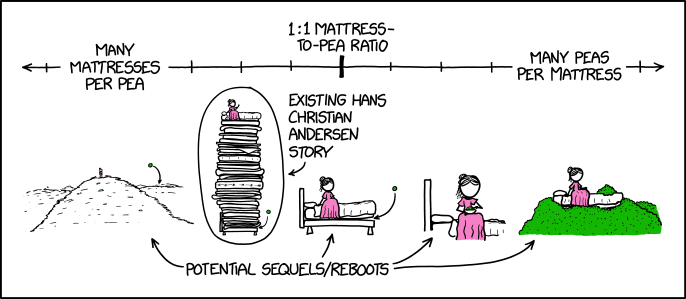
Randall Munroe’s XKCD ‘The Princess and the Pea’
Download Free eBook
[su_panel border="0px solid #ddd" radius="0" text_align="center" padding-top="0px" padding-bottom="0px"]

[/su_panel]

Join the Community
- Add your blog to Security Creators Network
- Write for Security Boulevard
- Bloggers Meetup and Awards
- Ask a Question
- Email: info@securityboulevard.com
Useful Links
Related Sites
- Techstrong Group
- Cloud Native Now
- DevOps.com
- Digital CxO
- Techstrong Research
- Techstrong TV
- Techstrong.tv Podcast
- DevOps Chat
- DevOps Dozen


Email*
✓
Thanks for sharing!
previous next slideshow
We'd like to show you notifications for the latest news and updates.
Allow Cancel