This website or its third-party tools process personal data. You can opt out of the sale of your personal information by clicking on the "Do Not Sell or Share My Personal Information" link.
Do Not Sell or Share My Personal Information
Opt-out Preferences
We use third-party cookies that help us analyse how you use this website, store your preferences, and provide the content and advertisements that are relevant to you. However, you can opt out of these cookies by checking "Do Not Sell or Share My Personal Information" and clicking the "Save My Preferences" button. Once you opt out, you can opt in again at any time by unchecking "Do Not Sell or Share My Personal Information" and clicking the "Save My Preferences" button.
- [x]
Do Not Sell or Share My Personal Information
Cancel Save My Preferences
Your opt-out preference has been honored.
Banner closes automatically in s...
Tuesday, November 17, 2026

Security Boulevard
The Home of the Security Bloggers Network
Community Chats Webinars Library
TwitterLinkedInFacebookRedditEmailShare
Home » Security Bloggers Network » The four places AI runs in Mend SAST
The four places AI runs in Mend SAST
*** This is a Security Bloggers Network syndicated blog from Mend.io authored by the team. Read the original post at: https://www.mend.io/blog/ai-in-sast/
Four jobs, two years in production, and measured results. Here is what each one does for the developer on the other end.
Mend SAST has been running frontier models in production since 2024. Not in a lab, not in a pilot, in the scans our customers run every day.
There are four places a model does work in the product, and each one takes work off a person. Here is what they are and what you actually get out of them.
“The models are not there to be impressive. Each one sits where a person was already making a judgment call, doing it at the speed of the queue instead of the speed of a calendar.”
Asaf Saar, EVP of Product, Mend.io
1. Remediation: the fix arrives written
When Mend SAST finds something in a supported language, a model writes the suggested fix and drops it into the repository workflow. You are not reading a finding in one place and then going somewhere else to work out how to fix it.
Third-party testing put those fixes 46% more accurate than the competitor average, and we published that benchmark back in 2025.
2. Agentic triage: the false positives get caught first
Agentic triage traces a finding’s data flow, tells you whether it holds up, and shows the exploitation path on request.
That is the Monday morning queue, already sorted before anyone opens it. What reaches a developer is what survived the check, and that is the whole difference between a backlog people work through and one they quietly stop reading.
3. Project classification: findings ranked by what they threaten
Contextual Project Classification labels findings by how sensitive the project is: payments, healthcare, anything touching PII.
A SQL injection in a billing service and the same pattern in an internal reporting tool are not the same problem. Treating them the same way is how a security team loses the argument with engineering about what gets fixed first.
4. Repository context: the scan knows what it is reading
Before any of that, a model works out what the codebase actually does, so findings get ranked against that service instead of against some generic baseline.
It runs ahead of the other three and feeds all of them. You only notice it when it is missing, which looks like a scanner being confidently wrong about what matters.
What the models are not allowed to do
None of the four decides anything on its own, and that is on purpose.
The model that writes a fix never decides whether the finding was real. Triage flags, a person decides, and the decision is recorded. Classification shapes priority without touching severity. The scan itself stays deterministic.
Here is the reasoning. Static analysis traces a path through code precisely and has no idea what that code is supposed to allow. A model is the opposite. It is good at working out intent, and it will confidently describe a data flow that does not exist.
Put a model everywhere and you ship confident nonsense at scale. Put it nowhere and every finding lands on a developer with no context at all.
The engine underneath runs at 38% higher precision and 48% higher recall than benchmark competitors, and scans up to 10x faster than traditional SAST. The models make that output easier to act on. They are not the thing producing it.
If you are evaluating anyone’s AI claims in this category, three questions sort it out fast. Where does the model sit? What can it decide without a person? And what does the output measure out at? We can answer all three.
Point Mend SAST at your own code and read the fixes it writes.
TwitterLinkedInFacebookRedditEmailShare
TwitterLinkedInFacebookRedditEmailShare
November 17, 2026 November 17, 2026Shannon Davis
- ← After Black October, OffSec Turns PHPH2Shell and Other New Vulnerabilities Into Hands-On Labs
- When an AI Agent Does the Job, Who Owns the Outcome? →
Techstrong TV
Click full-screen to enable volume control
Watch latest episodes and shows
Tech Field Day Events
Upcoming Webinars

Podcast
Secure by Design
2 weeks ago |Chris Blask
A Bear Doesn’t Have a Dashboard
3 weeks ago |Chris Blask
The Maintainer Was Not an NPC
4 weeks ago |Chris Blask
Long Live Ship Chicken
1 month ago |Chris Blask
The Playable Universe Is Not a Game
1 month ago |Chris Blask
The Next Chapter Has to Make Sense
Press Releases

GoPlus’s Latest Report Highlights How Blockchain Communities Are Leveraging Critical API Security Data To Mitigate Web3 Threats
C2A Security’s EVSec Risk Management and Automation Platform Gains Traction in Automotive Industry as Companies Seek to Efficiently Meet Regulatory Requirements
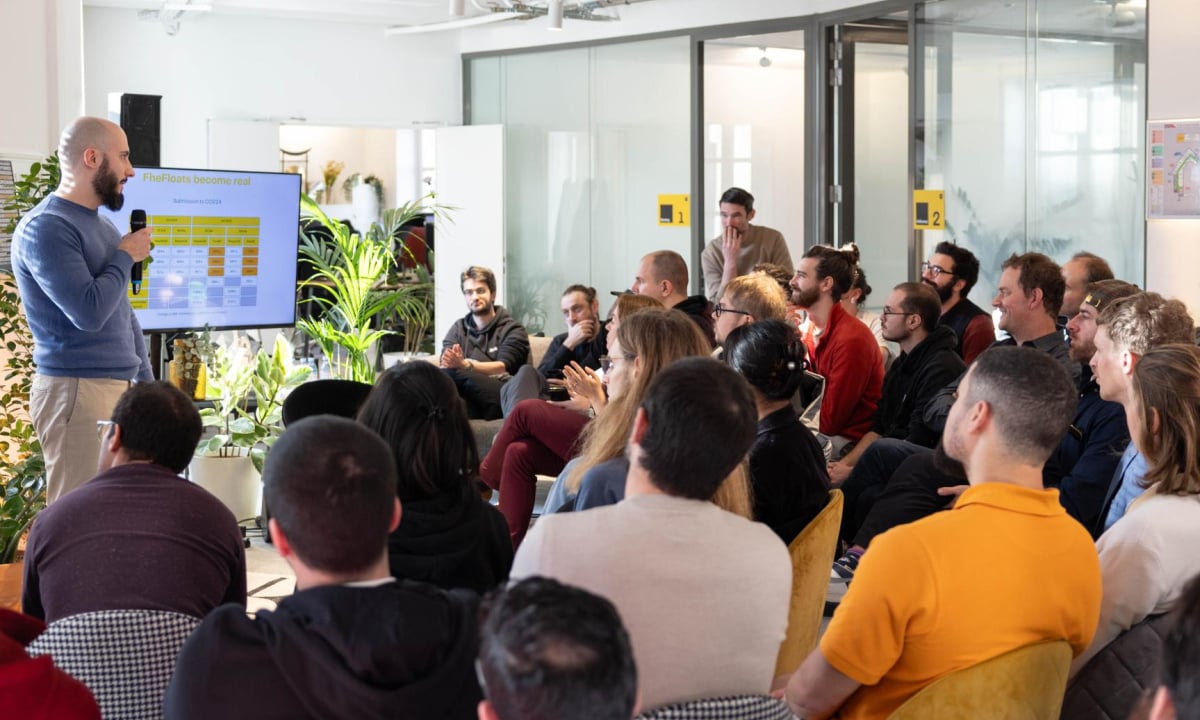
Zama Raises $73M in Series A Lead by Multicoin Capital and Protocol Labs to Commercialize Fully Homomorphic Encryption

RSM US Deploys Stellar Cyber Open XDR Platform to Secure Clients

ThreatHunter.ai Halts Hundreds of Attacks in the past 48 hours: Combating Ransomware and Nation-State Cyber Threats Head-On
Subscribe to our Newsletters
Get breaking news, free eBooks and upcoming events delivered to your inbox.
View Security Boulevard Privacy Policy
Most Read on the Boulevard
OpenAI Launches AI Security Tools to Find and Fix Software Vulnerabilities
Attacks on French Supermarket Freezers Expose Broad CI, OT Concerns
No Parking, No Standing? Florida Court Rules on Standing in Driver’s License Privacy Case
AI Can Help Bad Actors, OT Defenders Need to See Attack Path First, Close OT Environments
TSMC Confirms Employee Data Breach as Seller Seeks Bitcoin for 46K Records
Daily OT Security News: November 14, 2026
Daily OT Security News: November 13, 2026
Daily OT Security News: November 15, 2026
ARTEX AI Attack Framework: SafeBreach Coverage for FBI FLASH Alert FLASH-20261113-001
When EU AI Act Article 73 Starts Applying | Kovrr
Industry Spotlight

CybersecurityFeaturedIndustry SpotlightSecurity AwarenessSecurity Boulevard (Original)Social - FacebookSocial - LinkedInSocial - XSpotlightThreats & Breaches
NYC Sewers Crawling With Rats and Potential Bad Actors
June 18, 2026Teri Robinson | Jun 18Comments Off on NYC Sewers Crawling With Rats and Potential Bad Actors

Cloud SecurityCybersecurityData PrivacyData SecurityFeaturedIncident ResponseIndustry SpotlightMalwareMobile SecurityNetwork SecurityNewsSecurity AwarenessSecurity Boulevard (Original)Social - FacebookSocial - LinkedInSocial - XSpotlightThreats & BreachesVulnerabilities
Anthropic Mythos AI Model Strikes Fear in Trump Administration, U.S. Banks
April 12, 2026Jeffrey Burt | Apr 12Comments Off on Anthropic Mythos AI Model Strikes Fear in Trump Administration, U.S. Banks

AI and Machine Learning in SecurityCybersecurityFeaturedIndustry SpotlightSecurity Boulevard (Original)Social - FacebookSocial - LinkedInSocial - XSpotlight
The Day the Security Music Died
April 8, 2026Alan Shimel | Apr 08Comments Off on The Day the Security Music Died
Top Stories

Cloud SecurityCyberlawCybersecurityData PrivacyData SecurityEndpointGovernance, Risk & ComplianceIdentity & AccessIncident ResponseMobile SecurityNetwork SecurityNewsSecurity AwarenessSecurity Boulevard (Original)Social - FacebookSocial - LinkedInSocial - XSpotlightThreat IntelligenceThreats & Breaches
California Sues OpenAI Over Agent Hacking Incidents
November 17, 2026Jeffrey Burt | Yesterday0

Cloud SecurityCybersecurityData PrivacyData SecurityFeaturedIdentity & AccessIncident ResponseMalwareMobile SecurityNetwork SecurityNewsSecurity AwarenessSecurity Boulevard (Original)Social - FacebookSocial - LinkedInSocial - XSpotlightThreat IntelligenceThreats & BreachesVulnerabilities
Hackers Hide Malware in Optimizely Code, Hit 178 Major Websites
November 17, 2026Jeffrey Burt | Yesterday0

AI and Machine Learning in SecurityAI and ML in SecurityCyberlawCybersecurityFeaturedNewsSecurity Boulevard (Original)Social - FacebookSocial - LinkedInSocial - XSpotlight
ARTEX, AI Penetration Testing and the Rogue Locksmith
November 17, 2026Mark Rasch | Yesterday0
Security Humor
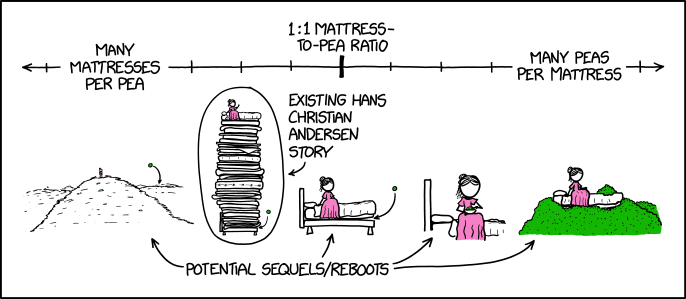
Randall Munroe’s XKCD ‘The Princess and the Pea’
Download Free eBook
[su_panel border="0px solid #ddd" radius="0" text_align="center" padding-top="0px" padding-bottom="0px"]

[/su_panel]

Join the Community
- Add your blog to Security Creators Network
- Write for Security Boulevard
- Bloggers Meetup and Awards
- Ask a Question
- Email: info@securityboulevard.com
Useful Links
Related Sites
- Techstrong Group
- Cloud Native Now
- DevOps.com
- Digital CxO
- Techstrong Research
- Techstrong TV
- Techstrong.tv Podcast
- DevOps Chat
- DevOps Dozen


Email*
✓
Thanks for sharing!
previous next slideshow