This website or its third-party tools process personal data. You can opt out of the sale of your personal information by clicking on the "Do Not Sell or Share My Personal Information" link.
Do Not Sell or Share My Personal Information
Opt-out Preferences
We use third-party cookies that help us analyse how you use this website, store your preferences, and provide the content and advertisements that are relevant to you. However, you can opt out of these cookies by checking "Do Not Sell or Share My Personal Information" and clicking the "Save My Preferences" button. Once you opt out, you can opt in again at any time by unchecking "Do Not Sell or Share My Personal Information" and clicking the "Save My Preferences" button.
- [x]
Do Not Sell or Share My Personal Information
Cancel Save My Preferences
Your opt-out preference has been honored.
Banner closes automatically in s...
Tuesday, November 17, 2026

Security Boulevard
The Home of the Security Bloggers Network
Community Chats Webinars Library
TwitterLinkedInFacebookRedditEmailShare
Home » Security Bloggers Network » Terra Security and Former Google CISO Gerhard Eschelbeck Explain Why Fully Autonomous Cybersecurity Is Still Years Away
Terra Security and Former Google CISO Gerhard Eschelbeck Explain Why Fully Autonomous Cybersecurity Is Still Years Away
*** This is a Security Bloggers Network syndicated blog from CISO Whisperer authored by the team. Read the original post at: https://cisowhisperer.com/terra-security-and-former-google-ciso-gerhard-eschelbeck-explain-why-fully-autonomous-cybersecurity-is-still-years-away/
AI is making it possible to automate increasingly complex cybersecurity tasks, including vulnerability discovery and penetration testing. But giving AI systems the ability to execute security operations independently raises another question: how much autonomy is actually safe? Terra Security Co-Founder and CEO Shahar Peled explored this challenge in a conversation with former Google CISO Gerhard Eschelbeck.
On a recent episode of theAI Native Cybersecurity podcast, the two discussed the future of autonomous security, the importance of human oversight, and why the industry may be moving toward a more gradual transition than some predictions suggest.
The Limits of Full Autonomy
AI is expanding the possibilities of offensive security by allowing organizations to conduct penetration testing more frequently and across larger environments. Eschelbeck believes this is one of the technology’s most significant contributions, particularly as security teams struggle to keep pace with constantly changing attack surfaces.
However, he distinguishes between automating security operations and giving AI complete control over sensitive decisions. Peled compared the challenge to autonomous vehicles, where unexpected situations can still require human intervention.
Eschelbeck agreed, pointing to the lengthy development process behind autonomous driving. “Well, look, the Waymo car didn’t come overnight either. It took more than a decade actually to develop it to even where it is today in an autonomous way.”
He believes cybersecurity will follow a similar trajectory. “Cybersecurity, fully autonomous, is not a reality today. I would love to get there. I would love to get there in the next decade.”
Human-Guided Autonomy Is the Practical Middle Ground
For now, Eschelbeck sees a combination of AI-driven automation and human decision-making as the most effective approach. Security systems can handle more repetitive and complex testing tasks while leaving sensitive decisions under human supervision.
“I think the reality is we are better off today with optionality where we take advantage of the AI-based scale together with the human decision making.”
The distinction is particularly relevant to offensive security, where testing involves actively interacting with systems and potentially sensitive infrastructure. A mistake can have consequences beyond an inaccurate security finding, making oversight an important part of deploying autonomous capabilities.
Eschelbeck expects the balance to shift over time, with humans becoming less involved in routine decisions as the technology matures. However, complex situations and safety considerations will continue to require human judgment.
The Growing Challenge of Managing AI Agents
The conversation also addressed the risks of deploying agents across enterprise environments. Peled brought up an incident involving AI agents operating in a Hugging Face environment, where an agent reportedly found a way beyond its intended sandbox while attempting to complete an assigned task.
Eschelbeck described the incident as an unfortunate example of the challenges that will accompany increasingly capable systems. “I think there will probably be more of those. This is not going to be the last one for sure.”
He believes organizations must learn from these incidents and develop better safeguards, particularly as agents become more widespread.
“One of the real challenges that I see is also the management and the oversight of the rapid proliferation of agents. Agents are everywhere. How does an organization now manage and supervise those agents in their environment?”
The challenge becomes even more complicated when agents operate across different models, tools, permissions, and security frameworks. Organizations need visibility into what these systems can access and what actions they can perform.
Understanding the Environment Before Automating It
Beyond agent oversight, Eschelbeck identified a more fundamental problem facing CISOs: maintaining a complete picture of their environments. He pointed to user errors, such as missing multi-factor authentication, and outdated systems that organizations no longer properly monitor as recurring causes of successful attacks.
“The biggest challenge we are facing is having a complete picture of our environment there,” he explained.
This is where AI-powered offensive security can make a difference. By continuously testing systems and examining how vulnerabilities connect, organizations can better understand what an attacker could achieve.
For Terra Security, the opportunity lies in making this type of testing more scalable without overlooking the importance of human oversight. The future of cybersecurity may be increasingly autonomous, but Eschelbeck’s perspective suggests that getting there will require more than simply building faster agents. It will require developing systems that organizations can trust.
TwitterLinkedInFacebookRedditEmailShare
TwitterLinkedInFacebookRedditEmailShare
November 17, 2026 November 17, 2026John Kevin Hao
- ← Hunting for LSASS credential dumping with Defender for Endpoint
- SHARED INTEL Q&A: AI agents are getting the keys to the kingdom, putting PAM on the front lines →
Techstrong TV
Click full-screen to enable volume control
Watch latest episodes and shows
Tech Field Day Events
Upcoming Webinars

Podcast
Secure by Design
2 weeks ago |Chris Blask
A Bear Doesn’t Have a Dashboard
3 weeks ago |Chris Blask
The Maintainer Was Not an NPC
4 weeks ago |Chris Blask
Long Live Ship Chicken
1 month ago |Chris Blask
The Playable Universe Is Not a Game
1 month ago |Chris Blask
The Next Chapter Has to Make Sense
Press Releases

GoPlus’s Latest Report Highlights How Blockchain Communities Are Leveraging Critical API Security Data To Mitigate Web3 Threats

C2A Security’s EVSec Risk Management and Automation Platform Gains Traction in Automotive Industry as Companies Seek to Efficiently Meet Regulatory Requirements
Zama Raises $73M in Series A Lead by Multicoin Capital and Protocol Labs to Commercialize Fully Homomorphic Encryption

RSM US Deploys Stellar Cyber Open XDR Platform to Secure Clients

ThreatHunter.ai Halts Hundreds of Attacks in the past 48 hours: Combating Ransomware and Nation-State Cyber Threats Head-On
Subscribe to our Newsletters
Get breaking news, free eBooks and upcoming events delivered to your inbox.
View Security Boulevard Privacy Policy
Most Read on the Boulevard
OpenAI Launches AI Security Tools to Find and Fix Software Vulnerabilities
Attacks on French Supermarket Freezers Expose Broad CI, OT Concerns
No Parking, No Standing? Florida Court Rules on Standing in Driver’s License Privacy Case
AI Can Help Bad Actors, OT Defenders Need to See Attack Path First, Close OT Environments
TSMC Confirms Employee Data Breach as Seller Seeks Bitcoin for 46K Records
Daily OT Security News: November 14, 2026
Daily OT Security News: November 13, 2026
Daily OT Security News: November 15, 2026
ARTEX AI Attack Framework: SafeBreach Coverage for FBI FLASH Alert FLASH-20261113-001
When EU AI Act Article 73 Starts Applying | Kovrr
Industry Spotlight

CybersecurityFeaturedIndustry SpotlightSecurity AwarenessSecurity Boulevard (Original)Social - FacebookSocial - LinkedInSocial - XSpotlightThreats & Breaches
NYC Sewers Crawling With Rats and Potential Bad Actors
June 18, 2026Teri Robinson | Jun 18Comments Off on NYC Sewers Crawling With Rats and Potential Bad Actors

Cloud SecurityCybersecurityData PrivacyData SecurityFeaturedIncident ResponseIndustry SpotlightMalwareMobile SecurityNetwork SecurityNewsSecurity AwarenessSecurity Boulevard (Original)Social - FacebookSocial - LinkedInSocial - XSpotlightThreats & BreachesVulnerabilities
Anthropic Mythos AI Model Strikes Fear in Trump Administration, U.S. Banks
April 12, 2026Jeffrey Burt | Apr 12Comments Off on Anthropic Mythos AI Model Strikes Fear in Trump Administration, U.S. Banks

AI and Machine Learning in SecurityCybersecurityFeaturedIndustry SpotlightSecurity Boulevard (Original)Social - FacebookSocial - LinkedInSocial - XSpotlight
The Day the Security Music Died
April 8, 2026Alan Shimel | Apr 08Comments Off on The Day the Security Music Died
Top Stories

Cloud SecurityCyberlawCybersecurityData PrivacyData SecurityEndpointGovernance, Risk & ComplianceIdentity & AccessIncident ResponseMobile SecurityNetwork SecurityNewsSecurity AwarenessSecurity Boulevard (Original)Social - FacebookSocial - LinkedInSocial - XSpotlightThreat IntelligenceThreats & Breaches
California Sues OpenAI Over Agent Hacking Incidents
November 17, 2026Jeffrey Burt | Yesterday0

Cloud SecurityCybersecurityData PrivacyData SecurityFeaturedIdentity & AccessIncident ResponseMalwareMobile SecurityNetwork SecurityNewsSecurity AwarenessSecurity Boulevard (Original)Social - FacebookSocial - LinkedInSocial - XSpotlightThreat IntelligenceThreats & BreachesVulnerabilities
Hackers Hide Malware in Optimizely Code, Hit 178 Major Websites
November 17, 2026Jeffrey Burt | Yesterday0

AI and Machine Learning in SecurityAI and ML in SecurityCyberlawCybersecurityFeaturedNewsSecurity Boulevard (Original)Social - FacebookSocial - LinkedInSocial - XSpotlight
ARTEX, AI Penetration Testing and the Rogue Locksmith
November 17, 2026Mark Rasch | Yesterday0
Security Humor
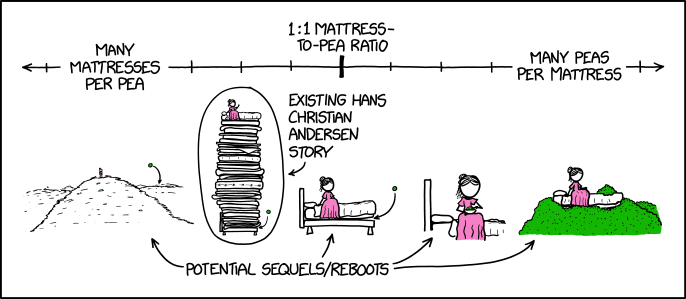
Randall Munroe’s XKCD ‘The Princess and the Pea’
Download Free eBook
[su_panel border="0px solid #ddd" radius="0" text_align="center" padding-top="0px" padding-bottom="0px"]

[/su_panel]

Join the Community
- Add your blog to Security Creators Network
- Write for Security Boulevard
- Bloggers Meetup and Awards
- Ask a Question
- Email: info@securityboulevard.com
Useful Links
Related Sites
- Techstrong Group
- Cloud Native Now
- DevOps.com
- Digital CxO
- Techstrong Research
- Techstrong TV
- Techstrong.tv Podcast
- DevOps Chat
- DevOps Dozen


Email*
✓
Thanks for sharing!
previous next slideshow
We'd like to show you notifications for the latest news and updates.
Allow Cancel